
Formentera Beaches: The Best Route by Private Boat
The Formentera beaches look close together on a map, yet each coast feels entirely different from the sea. In the north, Ses Illetes and S’Espalmador create a luminous landscape of pale sand and shallow turquoise water. To the west, Cala Saona sits between rust-coloured cliffs. Along the south, Migjorn unfolds through kilometres of sand, rock shelves and small coves.
This guide explains how to see the best beaches in Formentera by private boat from Ibiza without turning the day into a race. Your final itinerary should always be confirmed by the skipper after checking wind, swell, traffic, permitted anchoring areas and how much time your group wants for swimming or lunch.
If you searched for Formentera beaches, this is more useful than a simple top-ten list. You will find a coast-by-coast map, a realistic private boat route, and clear criteria for choosing where to stop. It also covers smaller Formentera coves that are worth seeing even when their size, exposure or popularity makes them unsuitable for anchoring.
In short: for a first visit, the most balanced route combines S’Espalmador, Ses Illetes and Cala Saona. With favourable sea conditions, the right boat and an early start, it may be extended towards Migjorn, Caló des Mort, Es Caló or Es Pujols. You do not need to circle the entire island to experience the best Formentera beaches. Two or three generous stops usually create a better day than six hurried ones.
Formentera beaches by private boat at a glance
| Area | Why visit from the sea | What to know |
|---|---|---|
| S’Espalmador | Natural setting, pale sand and a memorable first stop from Ibiza | It lies within the Natural Park; anchor only where permitted and on sand |
| Ses Illetes | Turquoise shallows, beach restaurants and Formentera’s signature view | Popular anchorages become busy in high season |
| Cavall d’en Borràs | Clear shallow water, juniper trees and a relaxed nautical atmosphere | A useful alternative to Illetes depending on wind and traffic |
| Cala Saona | Turquoise bay, red cliffs and attractive late-afternoon light | Actual shelter depends on swell direction and available space |
| Migjorn | Five kilometres of sand, rocky sections and small named beaches | An extension for suitable days, not a compulsory stop |
| Es Caló and Ses Platgetes | Traditional boathouses, low rocky shore and transparent water | Exposure changes with the wind; the skipper decides whether to continue |
The Formentera Tourist Board’s beach guide shows how differently the island’s beaches are oriented. That geography is an advantage when travelling by boat: if one side is exposed, another may be more comfortable. However, shelter from the wind does not automatically mean freedom from residual swell, marine traffic or Posidonia seagrass.
Why explore the Formentera beaches from the sea?
On land, each beach is a separate destination reached from the island’s main road. From a boat, the geography joins together. You see the narrow Es Trucadors peninsula, the channel towards S’Espalmador, the low northern coastline, the western cliffs and Migjorn’s great southern arc. Changes in water colour also reveal sand patches, rock and darker seagrass meadows.
A private boat allows the day to fit the group and turns the Formentera beaches into one adaptable itinerary. A family might prefer one long swim in calm water followed by lunch on board. Friends may want a table at Ses Illetes and a second anchorage for paddleboarding. A couple could save Cala Saona for the warmer afternoon light. The advantage is not simply reaching more places; it is choosing the coast that works best that day.
The skipper can also change the sequence. If Ses Illetes is crowded, you may begin elsewhere and return later. If westerly swell makes Cala Saona uncomfortable, that stop can be replaced with a better-protected area. A professionally planned private boat route is a flexible framework, not an immovable checklist.
There is another practical benefit to seeing the Formentera beaches this way. A day charter from Marina Ibiza avoids combining ferry timetables, a hire vehicle, parking and repeated road journeys. The crossing becomes part of the experience, and most of the useful hours are spent beside the water. Travellers who want to visit La Mola lighthouse, villages and inland paths should plan a separate day on land; a beach day and an island road trip answer different intentions.
The best private boat route to the Formentera beaches from Marina Ibiza
The route below is designed for a full private day with departure and return at Marina Ibiza. Its core follows the north and west coasts of Formentera. Migjorn and Es Caló are optional extensions that require favourable conditions, adequate range and a schedule with enough margin for the return crossing.
1. The Ibiza–Formentera crossing and arrival at S’Espalmador

Leaving Marina Ibiza, the boat heads south past the waters and islets of Ses Salines Natural Park. The city skyline recedes and the low silhouettes separating Ibiza from Formentera become more distinct. This is the right moment for the safety briefing, sun protection and preparing only what you need for the first swim.
S’Espalmador is a spectacular arrival, but it is also an ecologically sensitive island. The Balearic Islands natural park authority restricts anchoring within the park to permitted areas and suitable sandy bottom. Access ashore must follow authorised channels, and the once-publicised mud baths are prohibited.
When the skipper identifies a safe and legal position, Es Racó de s’Alga can provide the first unhurried swim. The water is often beautifully clear over pale sand, while the lack of urban development gives the stop a strong sense of separation from Ibiza. Snorkelling close to the boat and taking in the shoreline are usually more rewarding than rushing straight onto the beach.
If the mooring area is full, the wind is unhelpful or the bottom does not allow a responsible stop, S’Espalmador can be appreciated while cruising and the swim moved to another northern beach. That is not a lesser itinerary. Protecting the site and avoiding a marginal anchorage are part of a well-run Formentera boat trip.
2. Ses Illetes, Llevant and Cavall d’en Borràs

Ses Illetes occupies the western side of Es Trucadors and is the most recognisable of all the Formentera beaches. The official Ses Illetes guide highlights its long strip of sand, small offshore islets and generally calm, shallow water. From deck, the patchwork of blues is particularly striking because you can see how the sandy bottom shapes the colour.
Rather than deciding on one anchorage before departure, compare both faces of the peninsula. Llevant lies on the eastern side and can react very differently to the same wind. Cavall d’en Borràs, south of Illetes and closer to La Savina, combines clear sand, juniper trees and distant views towards Es Vedrà. One side may be calmer while the other carries chop or residual swell.
The skipper considers more than colour: bottom type, depth, swinging room, traffic, bathing zones and the afternoon forecast all matter. In July and August, arriving earlier can improve the experience, but no departure time guarantees an empty anchorage. It is often better to choose a slightly less famous patch with enough space than force a position beside the busiest part of Illetes.
The north is ideal for swimming, relaxed snorkelling over the sand, paddleboarding and lunch. Several well-known restaurants are accessible from the Illetes and Cavall d’en Borràs area, but the table and boat transfer must be coordinated in advance. A long restaurant lunch changes the rest of the route, so decide whether the day’s priority is dining ashore or spending more time in the water.
3. Punta de sa Pedrera and Cala Saona

After leaving the northern beaches and cruising down the west coast, Formentera changes texture. Long open beaches give way to rock platforms, small inlets and low cliffs. Punta de sa Pedrera is an attractive stretch to see from the water, provided the boat keeps a safe distance from rocks, swimmers and other craft.
Cala Saona is the west coast’s great sandy exception. The official Cala Saona guide describes a small bay between Punta Rasa and Caló d’en Trull, with a sandy bottom, transparent water and traditional fishermen’s boat huts. From the sea, the contrast between red rock, green vegetation and turquoise water is far more evident than it appears on the approach by road.
When conditions suit, Cala Saona deserves a long swim rather than a quick photo stop. The edges of the bay add rocky habitat for snorkelling, while the enclosed landscape feels completely different from Ses Illetes. Kayak or paddleboard exploration around Punta Rasa may be possible, but only with the crew’s approval and sufficient distance from rock.
The shape of a bay does not guarantee comfort in every forecast. Westerly swell can enter, anchoring room can become limited and the safe sandy patches may already be occupied. If the skipper cannot establish an appropriate position, the boat can make a scenic pass and choose another bathing stop. A beautiful beach is not worth an unsafe or environmentally damaging anchorage.
4. Migjorn: the extension for a favourable sea day

Migjorn runs for approximately five kilometres along southern Formentera. It is not one uniform beach but a sequence of named sectors—Es Mal Pas, Es Ca Marí, Racó Fondo, Es Còdol Foradat, Es Valencians, Es Arenals and Es Copinar—where sand alternates with low rock. Winter currents can change the width and appearance of individual stretches from one season to another.
Reaching Migjorn after Cala Saona adds meaningful cruising time and leaves less margin for the return to Ibiza. Treat it as an extension, not as a box that every private boat route must tick. On a calm day, it shows a broader, quieter side of the island than the concentrated northern anchorages. When southerly swell is present, pursuing the full route may reduce both comfort and swimming time.
The skipper chooses the sector after assessing conditions and seabed. Es Arenals and Es Copinar are among the best-known sandy portions, while other areas mix small coves with rocky platforms. If your group wants to dine on this coast, confirm restaurant access before departure. A venue that is easy to reach from the road may not offer a practical or safe transfer from the boat.
Migjorn is also useful for travellers comparing the best beaches in Formentera for space and variety. It is rarely one single view. One section may feel lively around a beach restaurant while another is more open and informal. That diversity is its strength, but it means the right stop is chosen on the day rather than promised from a brochure.
5. Caló des Mort, Es Caló or a return via the north

At Migjorn’s eastern end, Caló des Mort is a tiny cove framed by rock and fishermen’s huts. Its scale is part of its charm, but it also means limited room. From the water it may be exposed, busy or unsuitable for anchoring. In those circumstances, viewing it while cruising and selecting a roomier stop is the better experience.
Farther north, Es Caló and Ses Platgetes show Formentera’s maritime heritage through timber slips, low rocky shore and small sandy pockets. Continuing this far produces a varied near-circumnavigation, yet it only makes sense if the boat, sea state and timetable leave a comfortable return to Ibiza. The eastern and northern exposures must both be considered.
For most first-time groups, turning back before this point is the more balanced choice. The return can follow Ses Illetes or S’Espalmador, with a final short swim if conditions and time allow. Leaving margin avoids converting the last hours into a high-speed transfer and lets guests enjoy the approach to Marina Ibiza.
Which route should you choose: essential or extended?
Not every group needs the same itinerary. The practical choice depends on available hours, the main purpose of the day and how much cruising everyone will enjoy.
| Your priority | Recommended route | Best rhythm |
|---|---|---|
| First visit | S’Espalmador + Ses Illetes/Cavall d’en Borràs + Cala Saona | Two or three long stops with time for lunch |
| Maximum swimming | S’Espalmador + one northern beach | Little cruising once you reach Formentera |
| Restaurant and atmosphere | Ses Illetes or Cavall d’en Borràs + a second anchorage | Pre-booked table and coordinated transfer |
| Contrasting scenery | North coast + Cala Saona | White sand, rocky shoreline and afternoon light |
| Exploring more coastline | North + Cala Saona + Migjorn/Es Caló | Only with a suitable forecast, boat and schedule |
A full circuit may be technically possible with certain boats and weather conditions, but it is not automatically the best private charter. The essential route leaves more time to swim, talk, eat without watching the clock and move elsewhere if the first beach is not as comfortable as expected.
Map of the Formentera beaches by coast
A Formentera beaches map is easier to understand when the island is divided by orientation. The zones do not serve the same purpose or react equally to wind. This coast-by-coast view explains why a private boat itinerary should not be locked several days in advance.
North: Ses Illetes, Llevant, Cavall d’en Borràs and S’Espalmador. This is the landscape most travellers picture when they imagine the best Formentera beaches: pale sand, shallow bottom and an intense spectrum of blue. Ses Illetes faces west; Llevant occupies the eastern side of Es Trucadors; Cavall d’en Borràs sits nearer La Savina; and S’Espalmador lies across the narrow channel at the peninsula’s tip. Their proximity and different orientations allow the skipper to compare conditions before stopping.
West: Cala Saona, Punta Rasa and Estany des Peix. Cala Saona is the most significant sandy beach on this coast and combines swimming, strong scenery and beautiful later light. Punta Rasa and Sa Pedrera add a more rugged passage. Estany des Peix, beside La Savina, is a valuable coastal lagoon rather than a free anchorage for visiting charter boats; access and mooring are regulated. Westerly swell deserves particular attention throughout this area.
South: Migjorn, Es Arenals, Es Copinar, Caló des Mort and Es Ram. Migjorn Beach brings together kilometres of sand, rock shelves and small named places. Es Arenals and Es Copinar are two of its most recognised sectors, Caló des Mort is a minute cove at the eastern end, and Es Ram occupies a less accessible stretch. From the sea this coast feels open and spacious, but it requires more cruising from Ibiza and does not always provide shelter.
East and Tramuntana: Es Caló, Ses Platgetes, Es Carnatge, Cala en Baster, Sa Roqueta and Es Pujols. Ses Platgetes mixes sand and rock beside the fishing settlement of Es Caló. Farther north are rougher shores such as Es Carnatge and rocky inlets such as Cala en Baster. Sa Roqueta and Es Pujols return to more accessible beaches with services ashore. Es Pujols is convenient from town, although a private boat from Ibiza will usually prioritise the north, Cala Saona or Migjorn for the overall route quality.
This layout prevents a common mistake: assuming every cove is interchangeable. Ses Illetes provides the classic first impression; Cala Saona offers a different geological landscape; Migjorn rewards exploration; and small rocky coves often work best as scenic passages when they are crowded or exposed.
Comparing beaches by coast is more useful than forcing them into a universal ranking. It also allows less familiar places such as Cala en Baster or Es Ram to be included honestly, without promising that every location will be a suitable swim stop on the same day.
Which Formentera beach suits your kind of day?
There is no single best area for every traveller. The right choice depends on the group’s priorities and, above all, the marine forecast.
- For a first visit: S’Espalmador, Ses Illetes or Cavall d’en Borràs, and Cala Saona create the most complete route without trying to cover everything.
- For families with children: look for sandy bottom, calm water and enough time at one anchorage. Illetes may be ideal, but the skipper must assess traffic, depth and swell that day.
- For snorkelling: the mix of sand and rock around Cala Saona, Es Caló or selected Migjorn sectors often offers more visual variety than a broad sandy shallows. Tell the crew before swimming away from the boat.
- For the clearest-looking water: Ses Illetes, S’Espalmador and Llevant are especially luminous when the sea is flat and the sun is high. Turquoise colour depends on sand, depth, sunlight and suspended sediment; it is never identical every day.
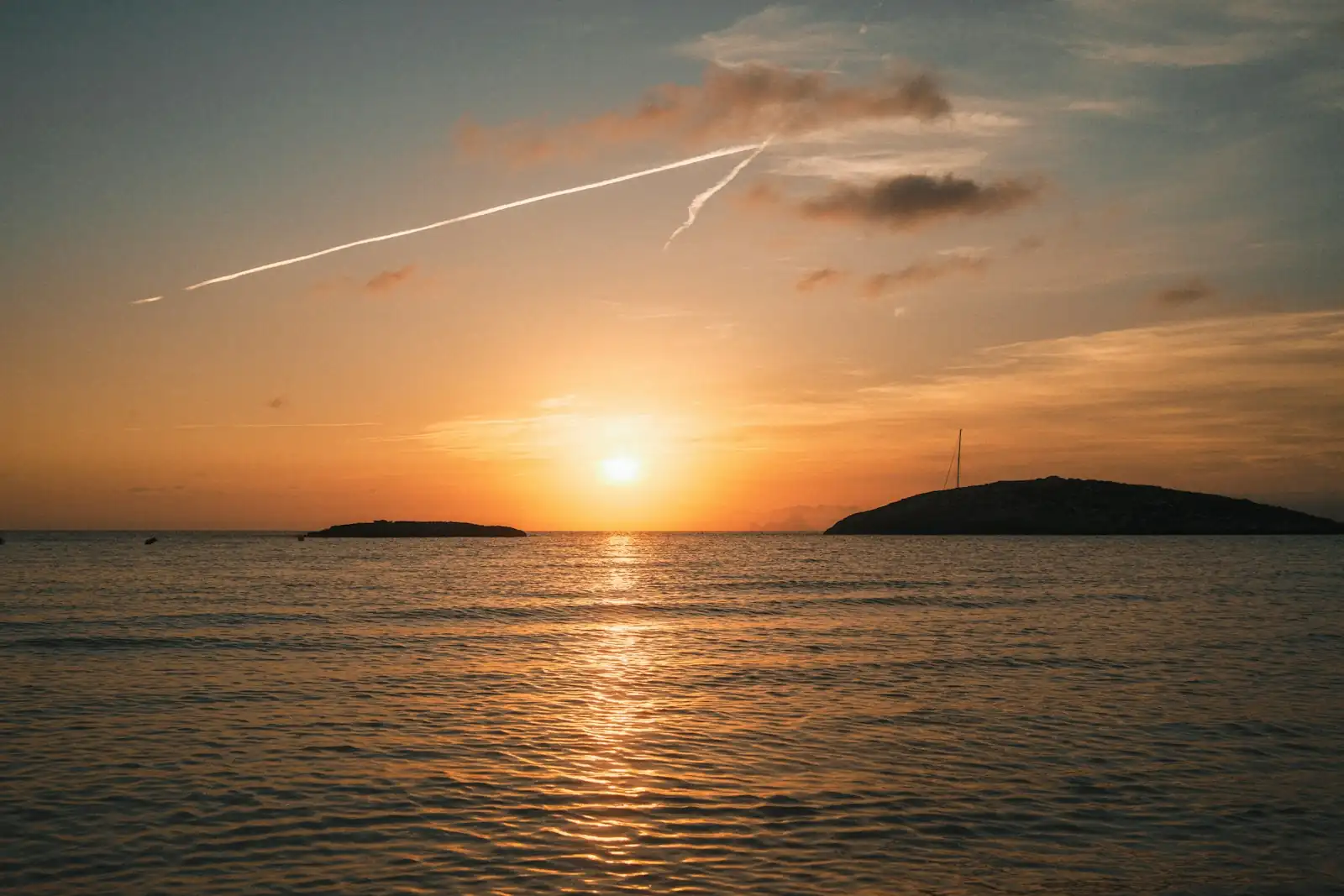
- For sunset light: Cala Saona and Cavall d’en Borràs face west and can provide a memorable finish. Charter hours, the return crossing and safety always take priority over the photo plan.
- For beach-club atmosphere and lunch: Ses Illetes and Cavall d’en Borràs have well-known options. Reserve early and confirm how guests will transfer from the boat.
- For a more open feeling: Migjorn offers a larger scale and several possible sectors, provided wind and cruising time permit.
- For the quietest day: do not chase the “secret beach” label. Ask the skipper for the best spacious legal anchorage away from the busiest traffic under that day’s conditions.
- To avoid a rushed itinerary: choose two priority beaches and let the skipper suggest a third. This normally means more swimming, fewer transfers and a higher-quality experience.
Short, essential or extended private boat route
Short Formentera boat route
A shorter itinerary should concentrate on the north. It can reach S’Espalmador, compare Ses Illetes with Llevant or Cavall d’en Borràs, and leave time for one long anchorage. This suits reduced charter hours, guests who want to spend almost the whole day in the water, or a forecast that encourages staying within the most comfortable area.
The short route is also sensible for families with very young children or anyone uncertain about longer crossings. Less movement between beaches means more predictable meal and rest times. It still includes the colour and landscape most visitors associate with Formentera.
Essential north coast and Cala Saona route
The essential route adds Cala Saona. It expresses the strongest contrast among the Formentera beaches: white sand and shallow northern water, a cruise down the rocky west coast, and a bay framed by red stone. With lunch organised efficiently, it still leaves time to swim without checking the clock every few minutes.
This is the best default for a first full-day private charter from Ibiza. It contains iconic scenery while preserving flexibility. If Cala Saona becomes uncomfortable, the captain can extend the best northern stop or choose another west-coast view without undermining the whole day.
Extended route towards Migjorn and Es Caló
The extended circuit continues towards Migjorn Beach, Caló des Mort, Es Caló or Ses Platgetes. It should never be sold as an unconditional promise. It requires an appropriate boat, favourable sea, enough fuel and range, punctual departure and a group comfortable with more time underway.
If any of those factors is missing, shortening the route is a quality decision rather than a failure. The decisive difference between a standard excursion and a private boat is this capacity to adapt: change the order, stay longer at the best anchorage and leave a crowded or uncomfortable area behind.
When planning, give the charter team two priorities and one secondary preference. For example: calm water and Cala Saona are essential, with a restaurant if timing permits. That gives the Formentera boat trip a clear direction while leaving the skipper enough freedom to select the safest and most enjoyable coast.
How wind and swell change the Formentera boat route
Formentera has shores facing west, east, north and south. This variety creates alternatives, but it does not remove the effects of the sea. An easterly wind may make Llevant less comfortable while favouring the Ses Illetes side; a westerly can reverse that pattern. Cala Saona and Migjorn react differently again to residual swell.
The forecast is more than a wind-speed number. A skipper considers direction, wave period, afternoon development, depth, traffic and the return track. The best route through the Formentera beaches is therefore confirmed close to departure and may still change during the day.
Booking around a clear priority is more useful than demanding exact coordinates. Explain whether the essential element is a restaurant, calm water, snorkelling, minimal cruising or late-afternoon light. The skipper can then protect the important part of the experience even if a named beach changes.
As a visual rule, a leeward beach may look calmer, but that alone does not guarantee a comfortable anchorage. Residual swell, poor swinging room or too many vessels can still make it unsuitable. Conversely, a moderate breeze does not automatically cancel the day: it may require a different coast, an earlier return or fewer stops. The professional decision covers the full itinerary, including the crossing back to Ibiza.
Responsible anchoring and Posidonia around Formentera
The transparent water surrounding the Formentera beaches depends on an ecosystem that needs active protection. Posidonia oceanica is a marine flowering plant, not seaweed. Its meadows provide habitat, produce oxygen, reduce wave energy and help retain sand. An anchor or chain dragging across the meadow can damage slow-growing plants.
Within Ses Salines Natural Park, anchoring on Posidonia or outside authorised areas is prohibited. Anchors may only be deployed on suitable permitted sand. The Balearic Government provides Posidonia mapping for responsible anchoring, but a screen does not replace a visual check and the skipper’s professional assessment.
A responsible captain confirms seabed, depth and swinging room before setting the anchor. The boat must also respect mooring buoys, access channels, bathing areas and safe distances. If no valid spot is available, the itinerary moves to another beach. That flexibility protects both the ecosystem and the guests.
Visitors to the Formentera beaches have a role too. Do not drop objects or rubbish overboard, avoid touching seagrass or wildlife, use reef-conscious sun protection where possible and never pressure the crew to anchor on a dark patch because it is closer to shore. Responsible access is part of the value of a private charter, not an inconvenience.
Where to eat during a Formentera beaches route
Ses Illetes and Cavall d’en Borràs contain several famous restaurants and are the simplest areas for combining beach time with lunch ashore. Book well ahead and confirm how the transfer from the yacht will work. The service, communication channel and collection point vary by venue and season.
Eating on board is the flexible alternative. It reduces waiting and lets the skipper select a quiet anchorage among the Formentera beaches according to the sea. For groups focused on swimming, this often produces a better rhythm. Arrange catering, drinks, allergies and children’s needs before departure.
If one restaurant is the central purpose of the trip, construct the route around the reservation. Trying to fit S’Espalmador, Illetes, Cala Saona, Migjorn and a long lunch into the same day leaves very little time to enjoy the water.
Before confirming, ask about table time, expected meal duration, tender collection and the operational phone number. Not every restaurant provides the same boat service, and no collection point works comfortably in every wind. A practical compromise is a light aperitif on board followed by a shorter meal ashore.
Best time and departure hour for the Formentera beaches
The main charter season runs from May to October. May, June, September and early October often balance daylight, warm weather and lower pressure. July and August provide the liveliest atmosphere and the widest range of services, but they also bring greater demand for boats, anchorages and restaurant tables.
A morning departure leaves more room to adjust the route between the Formentera beaches and usually enables an unhurried first stop. A later charter can work when the priority is golden-hour light at Cala Saona or Cavall d’en Borràs, although the itinerary must be shorter and the return carefully coordinated.
The best hour varies with the day, port, restaurant booking, wind and boat. Punctuality matters particularly in high season: every delay comes out of swimming time or the safety margin for the return.
| Period | What to expect | Recommended approach |
|---|---|---|
| May and June | More space and increasing water temperatures | Essential or extended route according to the forecast |
| July and August | Maximum atmosphere, demand and traffic | Leave on time, pre-book lunch and prioritise fewer stops |
| September | Warm sea with generally less pressure | Excellent balance for swimming and Cala Saona |
| Early October | Quieter water and more variable services | Reconfirm weather, charter hours and restaurants |
What to bring for a day on a private boat
Bring swimwear, high-factor sun protection, a hat, secure sunglasses, a light layer for the return and personal medication. A waterproof phone pouch is useful, and a soft bag takes less space than a hard suitcase. If you are prone to seasickness, seek appropriate medical advice in advance and tell the skipper as soon as symptoms begin.
Confirm whether towels, drinks, snorkel equipment or a paddleboard are included. Report allergies, reduced mobility, pregnancy or babies in the group so boarding and timings can be adapted. On deck, follow crew instructions and never enter the water before the boat is secured and the engine is safe.
Soft-soled shoes are usually preferable on board, while valuable jewellery and unnecessary electronics are best left ashore. Pack less than you would for the Formentera beaches by car; good charter boats provide storage, but an uncluttered deck remains safer and more comfortable.
Which private boat is best for Formentera?
For the essential north-and-Cala-Saona route, an agile open boat provides generous outdoor space and easy access to the water. If the group hopes to extend towards Migjorn or Es Caló, range, cruising comfort, shade, an on-board toilet and proper rest areas become increasingly important.
Group size is only the first criterion. Couples may value speed and a large sunbed; families benefit from shade, safe circulation and a broad bathing platform; groups planning a restaurant may need less catering space than guests eating on board. The right boat supports the desired rhythm for the Formentera beaches instead of simply being the largest available.
De Antonio Yachts use a walkaround deck and conceal the outboard engines beneath the aft platform, preserving a large area for swimming and relaxing. You can compare lengths and layouts in the De Antonio Yachts Ibiza charter fleet. When enquiring, provide the date, passenger number, lunch preference and the two beaches that matter most.
Frequently asked questions about Formentera beaches by boat
What are the best beaches in Formentera?
A balanced top five includes Ses Illetes for pale sand and turquoise shallows; S’Espalmador for its protected natural setting; Cala Saona for red cliffs and sunset light; Migjorn Beach for length and variety; and Ses Platgetes or Es Caló for maritime character. These are among the best beaches in Formentera, but the right choice depends on wind, traffic and whether you prioritise swimming, scenery, lunch or tranquillity.
There is no universal winner. Illetes may be best for shallow-water swimming, Cala Saona for late light and Migjorn for exploring different sectors. From a private boat, the best beach is the one that combines beauty, safe access and comfort under the day’s actual conditions.
Which Formentera beaches can you visit by boat from Ibiza?
A realistic private route can include S’Espalmador, Ses Illetes, Cavall d’en Borràs and Cala Saona. With favourable conditions and a suitable boat, it can extend towards Migjorn, Caló des Mort, Es Caló, Ses Platgetes or Es Pujols. The exact combination is confirmed by the skipper.
How long does it take to get from Ibiza to Formentera by boat?
It depends on the marina, boat, cruising speed and sea state. Treat a visit as a full-day experience rather than buying around one fixed crossing time. The charter team can estimate the passage for the specific yacht and forecast while preserving enough margin for a comfortable return.
Can you anchor at Ses Illetes?
Only where anchoring is permitted and on suitable sandy bottom. Anchoring on Posidonia is prohibited. Before manoeuvring, the skipper checks the seabed, depth, swinging room, buoys, swimmers and other traffic. If no responsible position is available, the boat uses another location.
Can you go ashore on S’Espalmador?
Access within the Natural Park is limited to authorised channels and current rules. Guests cannot land freely at any point, and the mud baths are prohibited. Follow the crew’s instructions and all on-site signage, as operational restrictions can change.
Can you sail around all of Formentera in one day?
It may be possible with the right boat, calm conditions and an efficient schedule, but it is not always desirable. A full circuit means more cruising and less time at anchor. For a first visit, S’Espalmador, Ses Illetes and Cala Saona usually create a more relaxed route.
Is it better to eat at Ses Illetes or on board?
Choose Ses Illetes if a particular restaurant and its atmosphere are central to the day. Eat on board for maximum flexibility and more swimming time. Either option can be excellent; coordinate the decision before departure so provisions, booking and tender transfer are prepared.
What is the best time of year to visit Formentera by boat?
The normal season is May to October. June and September often combine warm conditions, long light and less pressure than peak summer. July and August provide maximum atmosphere but require earlier boat and restaurant reservations and realistic expectations about traffic around popular beaches.
Discover the Formentera beaches from the sea
A memorable day among the Formentera beaches is not measured by circling the whole island. It is remembered through the first turquoise shallows beside S’Espalmador, a long swim off Ses Illetes, the red landscape of Cala Saona and the freedom to change course when the sea suggests a better plan.
To organise a private route, browse the De Antonio Yachts Ibiza fleet or request availability. Include your date, passenger number, priority beach and whether you prefer a restaurant or lunch on board. The team can recommend the boat and route that best fit the day’s conditions.
 Private Formentera route · Marina Ibiza
We design a private route from Marina Ibiza around the wind, sea state and your group’s pace. You enjoy Formentera while the skipper and our team take care of the rest.
Share this article


- +34 695 83 54 03
- hello@deantonioyachtsibiza.com
- Horario: Lunes a Domingo: 9:00 — 20:00
© 2026 De Antonio Yachts Ibiza.